Essay
Mending the Spine of a Borrowed Book
给一本借旧的书补脊
The reading room has two shelves, one fan that turns slower than it should, and a window facing the road. I know every book by its damage: the torn corner, the loose gathering, the cover softened to the texture of cloth. On Tuesdays I carry the broken ones home in a cloth bag and set them on the kitchen table.
This week it is a story about a crocodile who forgets how to swim. Seven years of borrowers have split the spine down the middle. I lay the book flat, warm the old glue with a hair dryer, and lift the cover away slowly, the way you would loosen a bandage from a child's knee.
What the glue cannot do
Grain by grain the old adhesive comes off. Underneath it the sewing is still there, thin and patient. I re-sew the two loose sections with waxed linen thread, press the spine under a heavy dictionary, and leave it until morning. By then it opens flat at page forty, where most readers stop anyway.
A boy in Year Three checks the shelf for it every morning. He never asks me directly; he stands near the repair tin and looks at the cloth bag. I tell him two more days. When I finally hand it over he reads the first page standing up, then sits down on the floor with his shoes off, as if he might be staying a while.
A book does not have to look new. It has to stay open.
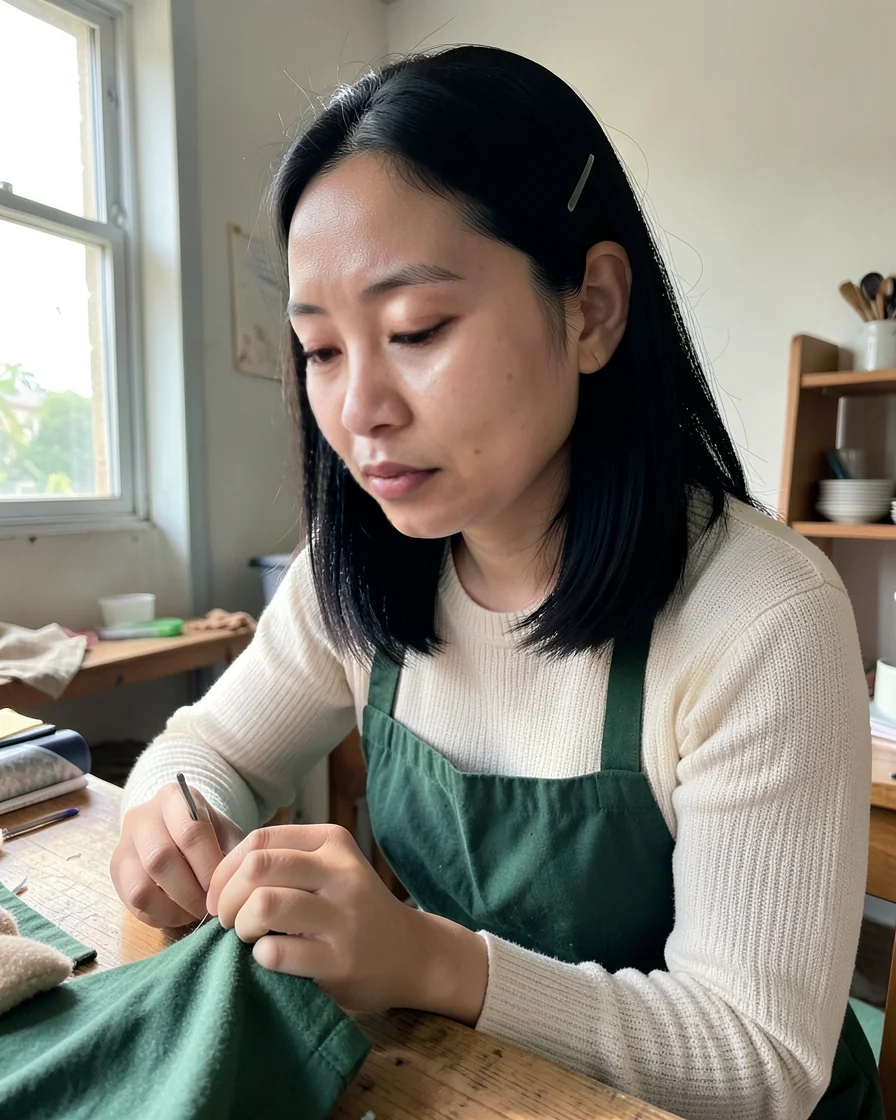
The repair tin was a biscuit tin in another life. Now it holds a bone folder, a small brush, PVA, waxed thread, a blade I keep out of reach. My mother taught me to darn socks at that same table; this is the same motion, pulling two sides together. I work in the evening with the window open and my sleeves pushed up.
Two shelves are enough
People ask whether a library this small is worth the trouble. I count differently. Forty children, two shelves, and every book passes through eleven pairs of hands before it retires. That is not a small library. That is a long queue standing behind each cover, waiting.
Every book that comes back damaged has been doing its job.
When a repair is finished I write the date inside the back cover, not to claim credit, only so the next reader knows the book has a history older than their own. The crocodile is back on the shelf with a small white scar along its spine. It will tear again. I have already cut the thread for it.
中文译文
图书室有两个书架、一台转得比该有的速度慢的吊扇,还有一扇朝路的窗。每一本书我都认得,靠的是它们的伤:卷起的角、松开的帖、封面软得像布。星期二我把破损的几本装进布袋带回家,放在厨房桌上。
这周是一本讲鳄鱼忘了怎么游泳的故事书。七年里被借来借去,书脊从中间裂成两半。我把书摊平,用吹风机温热旧胶,再慢慢把封面揭下来——像给孩子膝盖上的创可贴松边那样。
胶水做不到的事
旧胶一点一点刮下来。底下还留着线缝,细而耐心。我用上蜡的亚麻线把松掉的两帖重新缝紧,书脊压在厚词典下面,搁一夜。第二天它能在第四十页完全摊平——多数人本来也读到这里就停。
三年级有个男孩每天早上都来架子上看它。他从不直接问我,只站在修补盒旁边,盯着那只布袋。我说还要两天。等我真的把书递给他,他站着读完第一页,然后脱了鞋坐在地板上,像是打算待一阵子。
书不必看起来是新的,它只要还能摊开。
修补盒从前是个饼干罐。现在里面装着骨刀、小刷子、白胶、蜡线,还有一把我放在孩子够不到的地方的刀片。我母亲在同一张桌上教我补袜子;这是同一个动作,把两边拉拢。我夜里做活,窗开着,袖子挽上去。
两个书架够了
有人问,这么小的图书室值不值得费这些事。我算的是另一笔账:四十个孩子,两个书架,每本书退役之前要经过十一双手。这不叫小图书室。这是每一张封面背后排着的一条长队。
每一本破着回来的书,都完成了它的工作。
补完一本,我会在后环衬写下日期,不为记功,只是让下一个读者知道,这本书的历史比他还长。鳄鱼已经回到架上,书脊上留着一道浅浅的白疤。它还会再裂。线我已经先剪好了。