Essay
Measuring a Skirt for the Dance
为一场舞量一条裙子
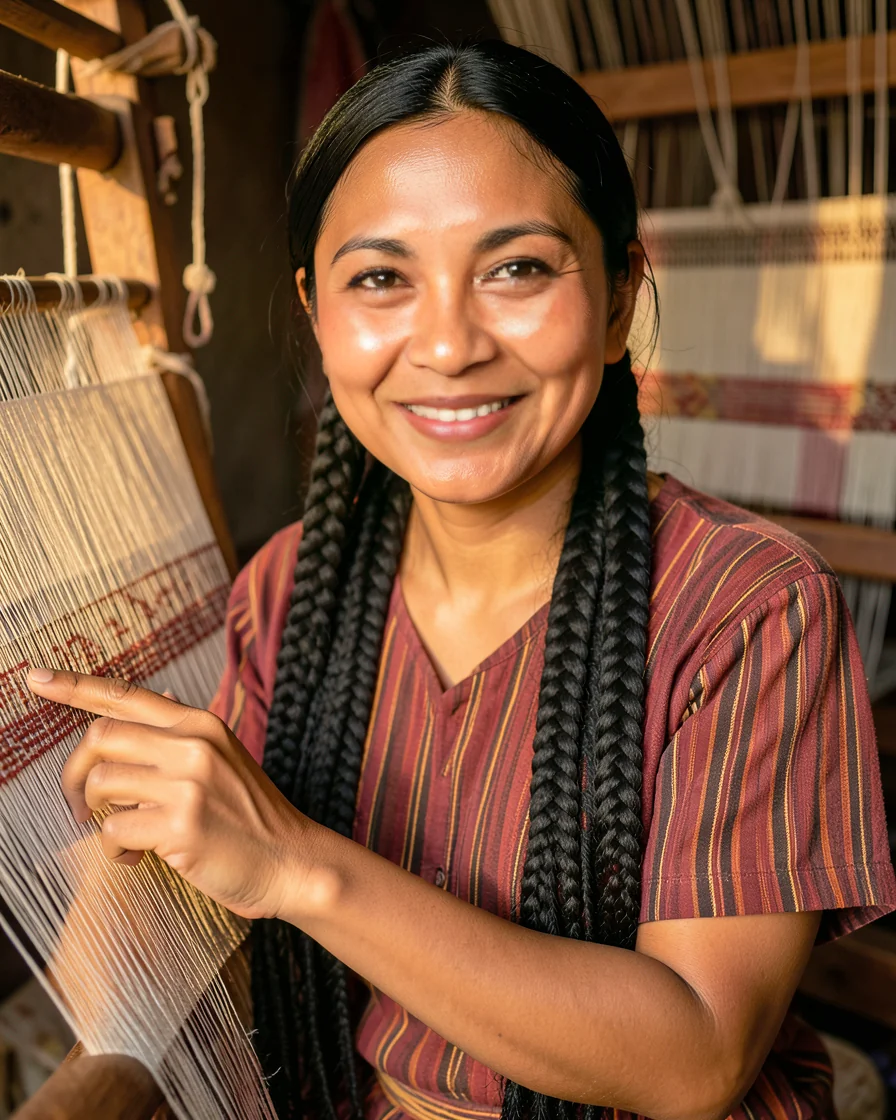
The girl who came on Tuesday wants a skirt the color of a ripe mango. She is nineteen, she dances in the entrada, and she brought her grandmother, who did not sit down once in two hours. They laid three swatches on the counter and argued over them while I pinned a hem. I like this part of the work. The color is never mine to choose.
My shop is one room at the edge of the market, and the good light leaves it by two in the afternoon. After that I sew by the bulb and by feel. The machine is older than I am. Up here it and I both need to stop now and then: I drink coca tea, watch the street, and the needle waits for me.
The hem must clear the stairs
We measured her twice. Once standing still on the wooden box, and once walking up and down the shop steps, lifting the fabric the way she will lift it in the square. A skirt that is only correct standing still is a skirt for photographs. She will climb to the plaza in it, dance four hours, and sit on a curb afterwards to eat.
A skirt is not finished until it has carried someone uphill.
The pleats take the longest. Each one is pinned, pressed, pinned again, and the wool has opinions. Too stiff and she cannot turn; too soft and the whole thing collapses after an hour of dancing. I keep a skirt of my own on a hook behind the door, four years old, so people can see what the cloth does with time.
What the fabric remembers
People bring skirts back to me the way they return a pot they borrowed. Hems come down, waistbands loosen, a seam gives out at the hip from too much sitting. I mend and do not charge much for it. The cloth keeps the shape of the person who wore it, and after a while that shape is worth more than the color.
Nothing made here is meant to stay clean.
The grandmother approved it on Friday. She walked around her granddaughter twice, tugged the waistband, and said the skirt would do. Then she asked me to make her one in the same cloth, in grey, for funerals. I said yes. I am cutting it now, and the machine and I are taking our time.
中文译文
星期二来的姑娘要一条熟芒果颜色的裙子。她十九岁,要在节庆的游行队伍里跳舞,还带来了外婆——两个小时里外婆一次都没坐下。她们把三块布样摊在柜台上争了又争,我就在旁边别裙边。我喜欢这一段工序。颜色从来不由我定。
我的铺子只有一间,在市集边上,下午两点以后好光就没了。之后我靠灯泡和手感缝。缝纫机比我还老。在这样的海拔上,它和我都得时不时停一停:我喝杯古柯茶,看看街上,针就等着我。
裙边要过得去台阶
我量了她两次。一次站在木箱上不动,一次在铺子里的台阶上来回走,像她以后在广场上那样提着裙摆。只在站直时好看的裙子,是给照片穿的。她要穿着它爬到广场,跳四个小时,然后坐在路沿上吃东西。
一条裙子要能带着人上坡,才算做完。
褶子最费时间。每一道都别住、熨过、再别一次,羊毛有自己的脾气。太硬她转不了身,太软跳一个钟头就全塌了。门后钩子上挂着我自己的那条裙子,穿了四年,谁要是想象不出布料会变成什么样,我就指给他看。
布记得的东西
人们把裙子送回来,像还回借去的锅。裙边垂了,腰头松了,胯上因为坐得太久而绷开的缝。我补,收钱不多。布留着穿它的人的形状,日子久了,这个形状比颜色更值钱。
这里做出来的东西,没有一件是为了保持干净的。
外婆星期五点了头。她绕着外孙女走了两圈,拽了拽腰头,说这条裙子行了。然后她让我用同样的布给她做一条,灰色的,办事穿。我答应了。现在我正在裁,缝纫机和我都不着急。