Essay
An Old Gray Vest, Mended
一件缝补过的旧灰背心
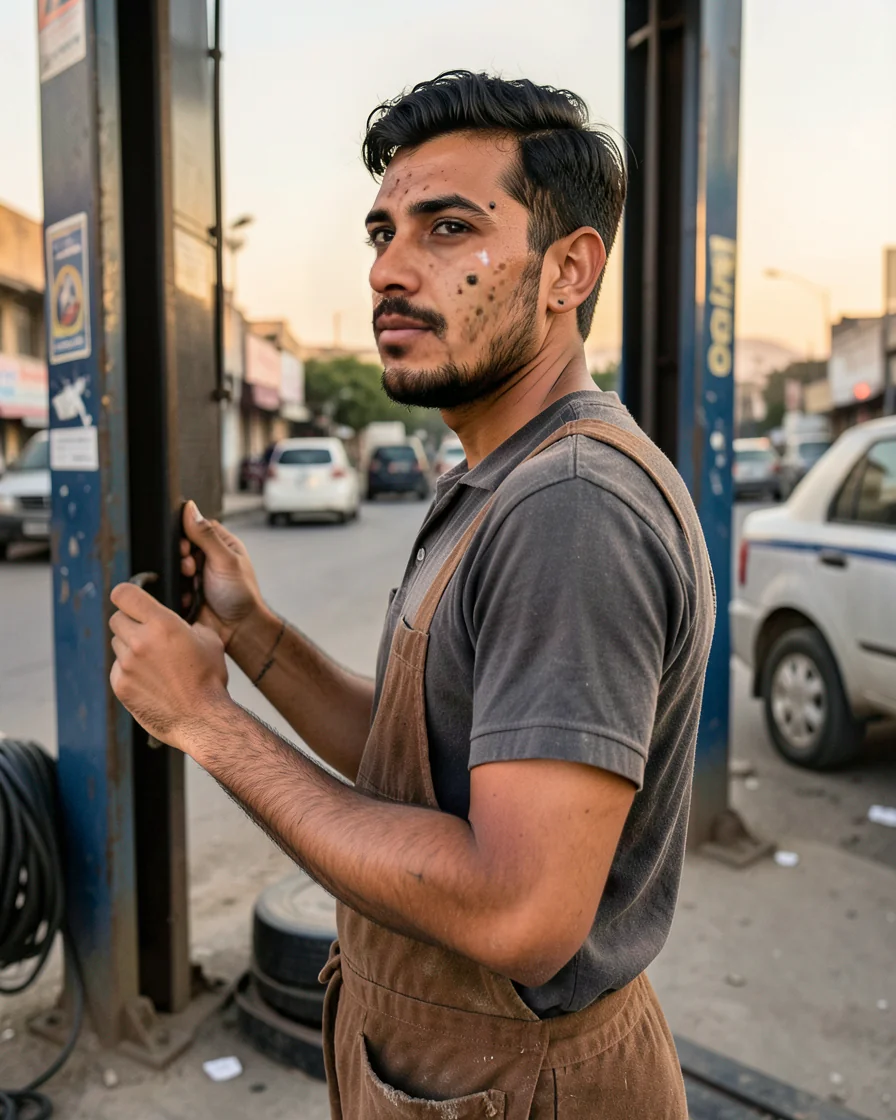
The old gray vest hangs on a nail behind the door of my repair shop west of Kabul. I bought it years ago for cold mornings when the road is still hard with frost and the wind comes straight across the open ground. Its canvas is stiff at first, then softens around the shoulders. I wear it over a dark hoodie while the radio plays, and take it off before I lean over the newest engines.
The vest has never been clean. Pale oil marks the left pocket; a black streak crosses the back from a door I once leaned against while carrying a battery. There is also a narrow tear beneath the right arm, made by the edge of a metal brace. I keep these stains. They do not tell customers where I have been, but they tell me exactly which motions the garment has learned.
Stains That Stay
In the first weeks of work, I wore a white cotton shirt and worried about every black fingerprint it collected. By the second winter, I had stopped. Grease is part of the job, as dust is part of the road west of Kabul. The vest hides the worst of it, though not all. A thumb marked with old scars can still reach into a pocket and leave a small, pale crescent on the cloth.
“A clean shirt would hide the work,” I used to think, “but the vest never did.”
Last month the seam under the right arm opened another inch. I washed the vest, dried it near the stove, and laid it flat on the bench after the shop closed. With a needle from an old sewing tin, I pushed black thread through the torn canvas. My fingers are made for narrow spaces, though a stitch asks for a different kind of strength. By the end, the seam was uneven but firm.
A Seam Under Pressure
My father taught me to replace a cracked hose before it burst. He never taught me to sew; the radio was his domain, and the small tin of tools was mine. When I was twelve, I held the light beneath the car while he tightened fittings and spoke to the engine. His hands were patient, never hurried. I have inherited that economy, if not his exact talent.
He never praised the repair; he checked the next bolt.
I wore the vest the next morning, with the new seam hidden beneath my left arm. It held through three jobs: a starter that only clicked, a truck with a rough idle, and a small car brought in from the eastern road. When the final customer drove away, I loosened the thread at my collar and listened to the radio. The vest smelled of soap, smoke, and a little oil. For once, I did not mind the oil.
中文译文
旧灰背心挂在喀布尔城西修车铺门后的钉子上。多年前我买下它,是为了那些寒冷的早晨:路面还冻得发硬,风从空地那边直吹过来。帆布起初很硬,后来肩部慢慢变软。我常把它套在深色连帽卫衣外面听收音机,也会俯身查看新发动机前先把它脱下。
这件背心从没干净过。左口袋上有浅油印,后背横着一道黑痕,是我曾抱着电池倚门时留下的。右臂下方还有一道窄裂口,是金属支架的边缘划的。我把这些痕迹都留着。它们不会告诉客人我去过哪里,却会告诉我,这件衣服学会了哪些动作。
留下的污渍
刚工作的那阵子,我穿白棉衬衫,操心每个沾上的黑指印。到了第二个冬天,我不再在意。油污是工作的一部分,尘土也是喀布尔城西道路的一部分。背心能遮住最显眼的几处,却遮不干净。带着旧伤的拇指伸进口袋,仍会在布面留下一道浅淡的弯月。
“干净衬衫能藏住活计,”我从前想,“背心却从不藏。”
上个月,右臂下的接缝又裂开一寸。闭店后,我洗了背心,在炉火旁烘干,把它平铺在工作台上。我从旧针线盒里取出针,把黑线一针一针穿过裂开的帆布。我的手指天生适合钻狭窄的地方,缝线却要求另一种力气。最后,针脚不算齐,却很牢。
受力的接缝
父亲教我在软管开裂前换掉它,却没教我缝纫;收音机是他的地盘,工具盒则归我。十二岁那年,他一边拧紧接头,一边对发动机说话,我替他举着手电筒。他的手耐心,从不催促。我继承了这种惜力,却没继承他的手艺。
他从不夸修理,只低头检查下一颗螺栓。
第二天早上我穿上背心,新缝的线藏在左臂下面。它撑过了三桩活:只咔哒不转的启动机、怠速发涩的卡车,还有从东边道路送来的小汽车。最后一位客人开走后,我松开领口的线,听收音机。背心闻起来有肥皂、烟和一点机油。这一次,我没有介意机油的味。