Essay
The Radio Behind the Workbench
工作台后的旧收音机

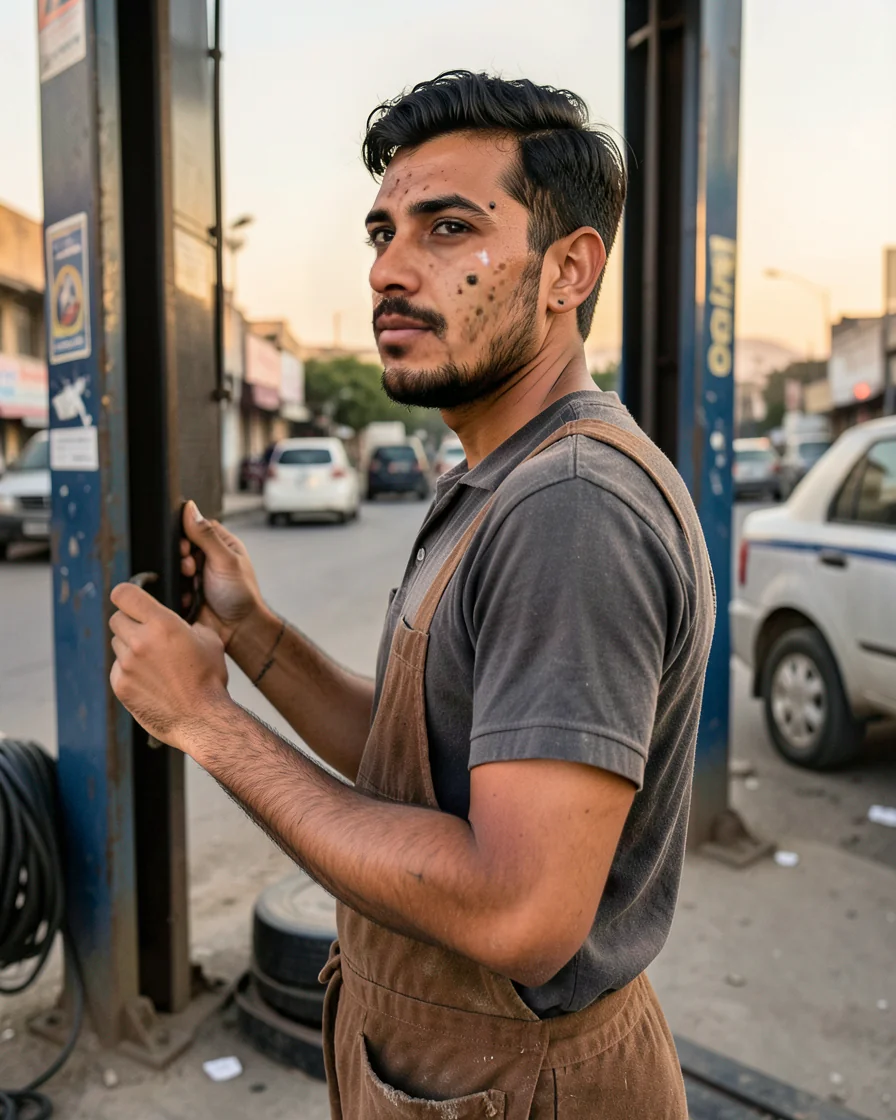
Every cold morning in Afghanistan, before I lift the shutter of my small shop on the dirt road west of Kabul, I switch on the old radio behind the workbench. It rests between a rusted panel and a box of cleaned bolts. Its scratched case is yellowed with age, and a dark tea stain marks the speaker cloth. I keep it there because the first job of the day should not begin with silence.
When a truck coughs outside, I listen first to the engine, then to the radio. The radio’s hiss has a thin, uneven edge; the truck’s rattle ends in a hard metallic knock. I can separate the two without looking. Now thirty-four, after years under cars with my father, my hands know what pressure sounds like, but I still set the radio beside the diagnostic tool. Some noises are easier to judge when th
What the Radio Reminds Me
My father brought the radio to the shop when I was twelve. I had already learned to hold a flashlight steady beneath a leaking fuel line, though my shoulders were narrow enough to scrape the underside of every old car. He let me tune the dial after the last customer left. We never discussed the songs much. He would name the tune, hum a few bars, and return to the engine.
My father used to say, “Turn the volume up; I want to hear what it hides.”
The radio has not worked properly in years. Its battery clips are loose, and the tuner slides only across a narrow band of stations. I have replaced the wire and cleaned the contacts, but a faint scrape remains inside the case. I could let it fail completely, yet I keep it running. The sound is rough, but it has become part of the shop’s morning: metal warming, a kettle beginning to sing, and the
A Small Repair, Alone
One customer last winter asked whether I could make the radio speak clearly again. I told him I could try the battery and the loose connection, nothing more. We sat without talking while I followed the wire with a thin screwdriver. When the static thinned, he thanked me and left. I returned the radio to its place between the panel and the bolts. Repairing a machine and mending an old habit can loo
Some faults announce themselves; the rest wait for a quiet hand.
At noon I make tea in a small metal pot and pour it into a glass thick with sugar. The radio remains behind me while I sort the day’s parts into trays. If the shop becomes loud, I put on my dark gray hoodie, turn the dial until the old songs come through, and tighten a screw in time with them. I rarely explain the diagnosis. The customer hears the engine settle; that is enough for me.
中文译文
阿富汗每个寒冷的早晨,在抬高喀布尔城西那条土路旁小店的卷帘门前,我先打开工作台后的旧收音机。它搁在生锈的挡板和一只装满洗净螺栓的铁盒之间。外壳刮花发黄,喇叭布上留着深色的茶渍。我把它放在那里,因为一天的第一桩活不该从寂静开始。
卡车在外面咳响时,我先听发动机,再听收音机。收音机的嘶声带着细细的、不均匀的边音;卡车的颠簸则收在一个硬而尖的金属撞击里。我不必抬眼就能把两者分开。如今三十四岁,跟着父亲在车底熬过那些年后,我的手知道压力听起来是什么样,但我仍会把收音机放在诊断工具旁。有些声音在相遇时,更容易判断。
收音机让我想起的事
我十二岁那年,父亲把收音机带到店里。那时我已经学会在漏油的油管下把手电筒稳稳举着,可我的肩膀还不够宽,仍会擦过每辆旧车的底盘。最后一位客人离开后,他会让我调台。我们很少谈论那些歌。他会报出曲名,哼上几小节,再回到发动机旁。
父亲常说:“把音量调大些,我想听听它藏了什么。”
收音机已经很多年没好好工作了。电池卡扣松动,调谐旋钮也只能滑过很窄的一段频段。我换过导线,也清理过接点,可机箱里仍有一丝细微的刮擦声。我本可以让它彻底坏掉,却一直让它开着。那声音粗糙,却已经成为店里的早晨的一部分:金属开始发热,水壶轻轻响起来,路上也渐渐有了车辆。
独自完成的小修理
去年冬天,一位客人问我能不能让收音机重新说清楚。我告诉他,我只能试试电池和松动的接点,别的做不到。我们没怎么说话,我用细螺丝刀顺着电线一点点找过去。杂音变薄后,他道了谢,离开了。我把收音机放回挡板和螺栓之间。修理机器与续接一段旧习惯,有时看起来竟很相似。
有些故障会自己开口,其余的要等一只安静的手。
中午,我用小金属壶煮茶,把茶倒进一只满是糖的厚玻璃杯。收音机留在我身后,我则把当天要用的零件分进几个托盘。店里吵起来时,我穿上深灰连帽卫衣,把旋钮转到老歌传来的位置,再拧螺丝。诊断我通常不解释。客人听见发动机平稳下来,对我来说这就够了。