Essay
Five Cups Before the First Job
第一单活之前的五杯茶
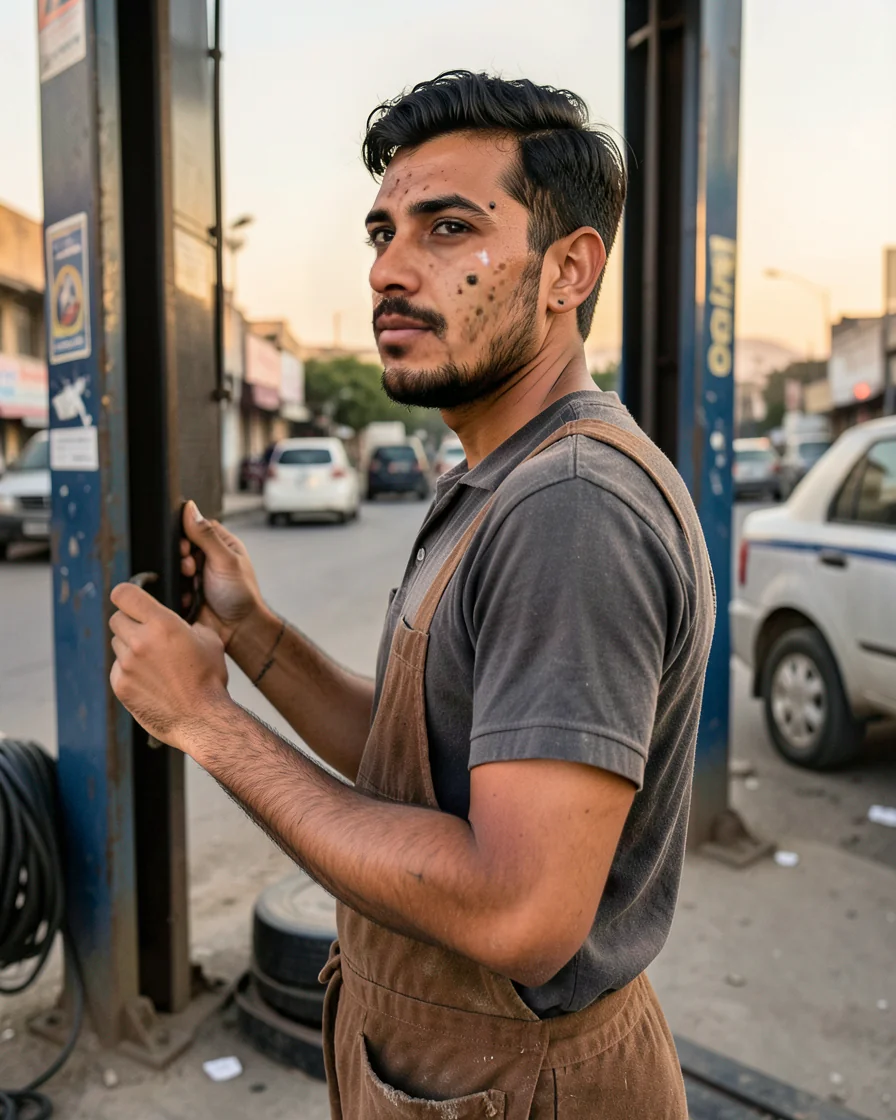
At half past five, while Kabul is still dark, I put the kettle on the small stove behind the workshop. The first glass is pale and nearly forgotten; the second carries enough sugar to blunt the bitterness. I carry it to the bench, set it near the socket wrench, and wait for the metal to warm beneath my palm. Tea is not a morning ritual here so much as a practical delay before the first customer ar
By the fifth cup, I can hear the difference between a loose belt and a tired bearing. The tea has not sharpened my ears, exactly, but it gives them a place to rest. I know each sound in the shop: the tick of a cooling engine, the scrape of a coin across the counter, the soft knock of someone testing a door that has swollen in the damp.
The Cup Beside the Wrench
When the shop fills, glasses gather beside the tools. One cup moves from the bench to the parts shelf, then back to my hand with a pale ring left on the rim. A driver waits for an oil leak to be found. Another watches me lift a worn jack and mutter about the price. I keep drinking between turns of the wrench, letting the tea cool until the last sip loses its heat.
“Pour the tea first,” I tell myself, “then turn the bolt.”
A scar on my right thumb runs from the knuckle to the nail. It came from a jack that shifted while I was under a raised car, years before I understood how quickly good weather becomes a bad place to work. My father cleaned the cut, wrapped it in old cotton, and continued tightening the wheel nuts. The scar stayed tender for weeks. The tea tasted bitter that morning, though I drank it as if it were
What the Hands Remember
Now I check the jack twice and keep my weight away from the line of a moving wheel. Old injuries do not speak when I am busy. They return as small hesitations: a thumb refusing to grip, a palm tightening too early, a moment when I choose the longer tool because the shorter one would require force. The work does not make me fearless. It only teaches me where patience belongs.
“Show me where the metal caught you,” my father once said.
On busy afternoons, I hum old songs while I work, usually without noticing. The tune disappears whenever a customer begins a long explanation. I replace the part, wipe my hands on a rag, and return to the bench. By evening the fifth cup has become a stack of empty glasses. I rinse them in the sink, leave the radio low behind the shutter, and let the day end with one clean pour.
中文译文
五点半,喀布尔还没亮,我就在工作间后面的小炉子上烧水。第一杯茶颜色很淡,几乎忘了喝;第二杯加了足够的糖,压住苦味。我把杯子端到工作台边,放在套筒扳手旁,等金属在掌心下变热。茶在这里不只是晨间惯例,更像是第一位客人到来前一段必要的等待。
喝到第五杯时,我能听出皮带松和轴承疲乏的区别。茶并不是让耳朵变灵,只是给耳朵一个歇脚的地方。我熟悉店里的每种声音:发动机冷却时的滴答声,硬币在柜台上拖过的刮响,还有人试推那扇受潮发胀的门时,轻轻的一敲。
扳手旁的杯子
店里忙起来,杯子会在工具旁挪来挪去。有人把杯子从工作台端到零件架,又端回手里,杯沿留下淡淡一圈茶渍。一位司机等着我找漏油处,另一位看我抬起旧千斤顶,低声抱怨价钱。我一边转动扳手一边喝茶,任它凉到最后一口的温度。
“先倒茶,”我对自己说,“再拧螺栓。”
我右手拇指有一道疤,从指关节一直延到指甲边缘。那是多年前车被千斤顶顶起时,我钻在车底,千斤脚突然滑了一下留下的。父亲替我洗净伤口,用旧棉花裹住,继续拧车轮螺母。伤口疼了几个星期。那天早上的茶很苦,我却像喝药一样把它喝完。
双手记得的事
如今我会检查两遍千斤顶,也会让身体避开正在转动车轮的受力方向。旧伤在我忙碌时从不说话,它们只会以细小迟疑回来:拇指不肯握紧,手掌过早收紧,或者我选择更长的工具,只因短的那把需要使力。这份工作没有让我无所畏惧,只教会我耐心该放在哪里。
“告诉我,金属在哪里夹住了你。”父亲有一次这样说。
忙起来的下午,我修车时会哼老歌,常常自己也没察觉。客人一开始长篇解释,曲子就会停下。我换好零件,用抹布擦手,再回到工作台前。到晚上,第五杯茶已经变成一摞空杯。我在水槽里洗净它们,在卷帘门降下后把收音机调低,让一天以最后一道清茶收尾。