Essay
What the Stall Looks Like at Six
六点的摊子长什么样
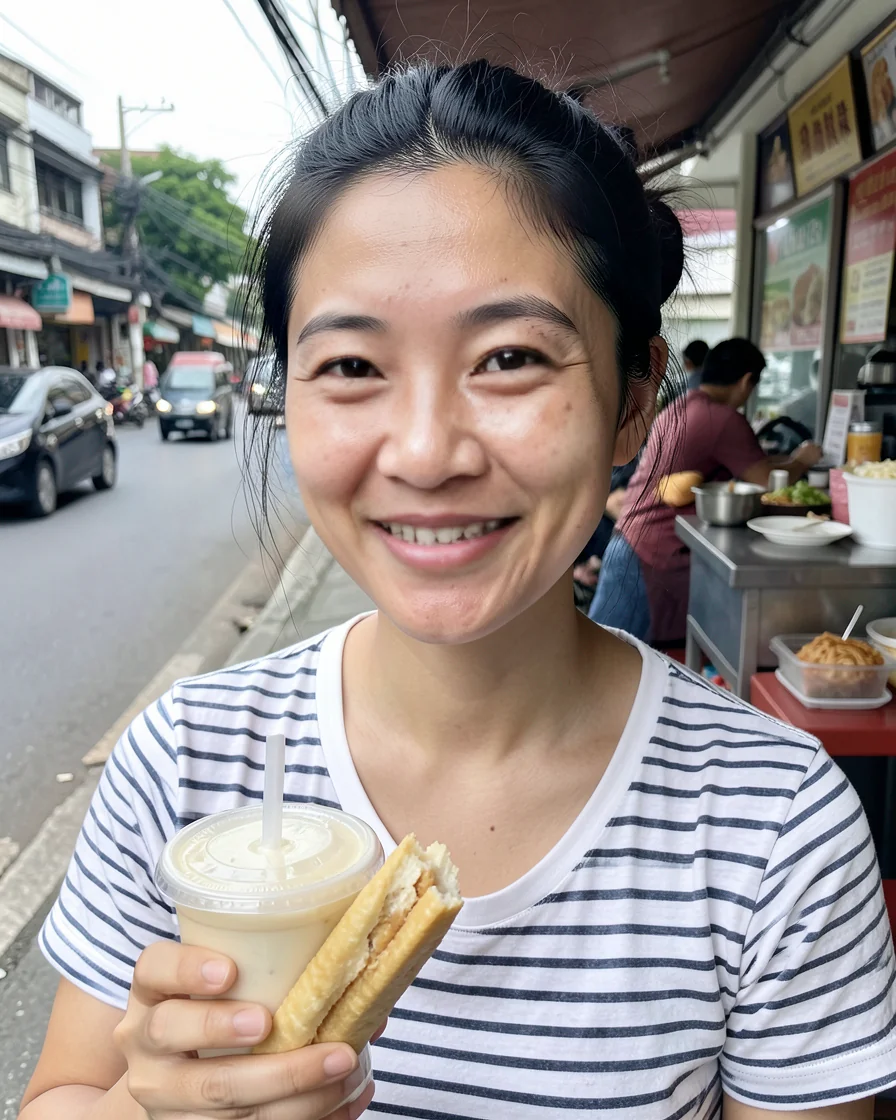
At five thirty I park the three-wheeler in the same gap between the noodle stall and the man who sells grilled squid. The table comes off first, then the cooler, then the folded cloth. By the time the sky turns the color of weak tea, the glass case is wiped and the first customer is already standing there, deciding.
The prep starts at two, at home, in a kitchen with one window and a fan that turns too slowly. Sticky rice soaks four hours, no shortcuts. Coconut milk gets a pinch of salt and nothing else. I taste it twice, then a third time. The neighbors must think I am difficult.
Sweetness is a decision
People ask how much sugar. I say I don't measure, which is half true. The mango decides. Nam Dok Mai in April is sweet enough to make you quiet; by August it needs help. A woman from Lampang told me once that my portions change with my mood. She was not wrong, and I have stopped apologizing for it.
The rice tells you when it is ready. It doesn't ask.
By seven the soi is loud. Tourists photograph the squid. University students split one plate four ways and pretend that is dinner. Two motorbike taxi drivers always take the table nearest the wall, the one that wobbles, and never complain about it. I give them extra coconut ice and they pretend not to notice.
The wind on the way home
The last customer is usually someone who has been drinking and wants mango sticky rice as a closing argument. I never refuse. I pack it hot, tie the bag twice, and tell them to eat it before they reach the river.
Then the chairs go up, the ice water goes into the drain by the curb, and the city gets quieter by one stall. My face in the mirror of the motorbike carries the whole day: sun on the cheekbones, a new line near the mouth. I am twenty-eight. I have decided these are records, not damage.
Home is fifteen minutes of wind and no one asking for anything.
中文译文
五点半,我把三轮车停在面摊和烤鱿鱼大叔之间那道老位置上。先卸桌子,再搬冰桶,最后是那块折叠布。等天变成淡茶色,玻璃柜已经擦干净了,第一个客人也站到了跟前,还在犹豫点什么。
备料从下午两点开始,在家里,厨房只有一扇窗,电扇转得很慢。糯米泡足四个钟头,没有捷径。椰浆里只放一小撮盐,别的都不加。我尝两次,再尝第三次。邻居大概觉得我这人很难伺候。
甜度是个决定
有人问我放多少糖。我说我不称,这话一半是真的。是芒果在决定。四月的金煌甜得让人说不出话;到了八月,它就得有人帮一把。有位从南邦来的大姐说过,我的份量随心情变。她没说错,我也不再为这个道歉了。
糯米自己会告诉你它好了没有。它不问你。
七点以后整条巷子都吵。游客对着鱿鱼拍照。大学生四个人分一盘,假装那就是晚饭。两个摩托出租司机总坐靠墙那张桌子,桌子会晃,他们从不抱怨。我多给一勺椰子冰,他们假装没看见。
回家路上的风
最后一个客人通常是喝了酒的,想要一份芒果糯米饭当收场。我从不拒绝。趁热打包,袋子系两道,让他到河边之前吃完。
然后收椅子,把冰水倒进路边的排水口,这条街就少了一个摊子,安静了一点。摩托车的后视镜里是我一整天的样子:颧骨上有太阳,嘴边多了一条线。我二十八岁。我决定把这些当作记录,不是损耗。
回家就是十五分钟的风,没有人向我要任何东西。