Essay
Eight Crates at the Pier
码头上的八只货箱
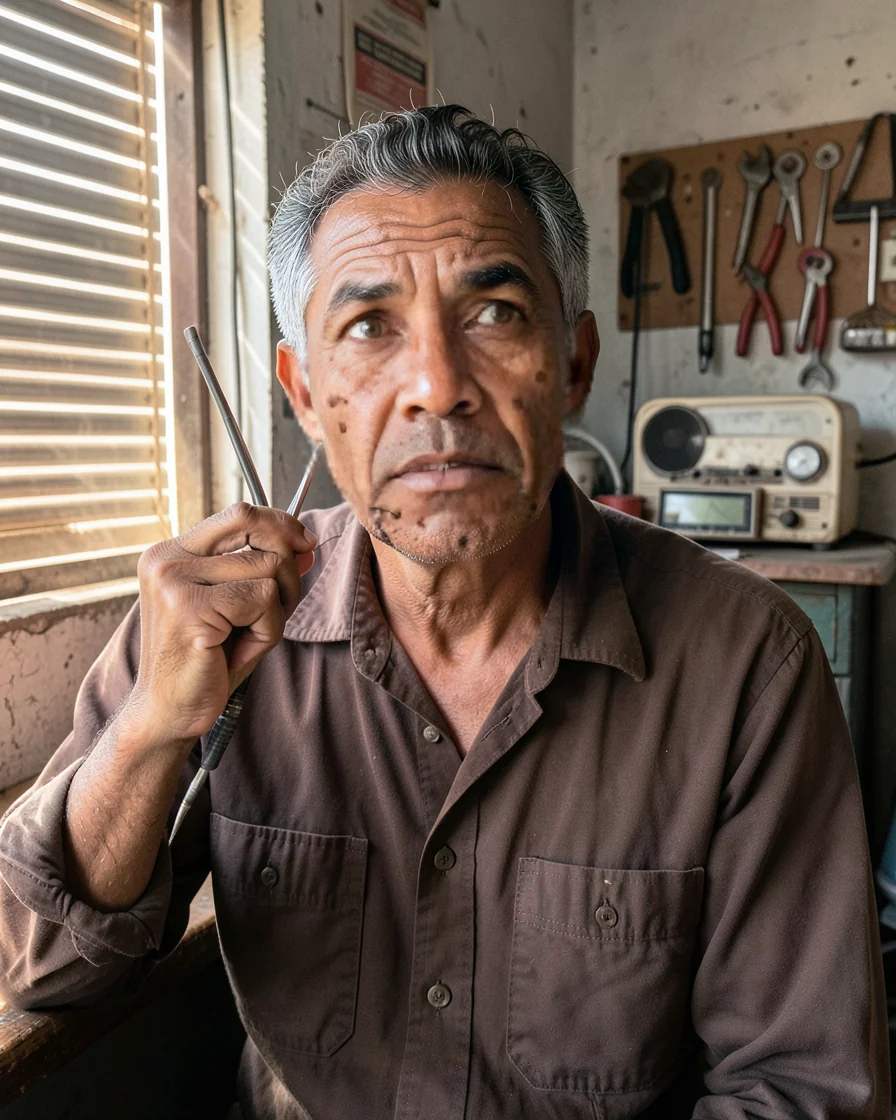
At forty-five, I can judge the weight of a crate before I see its label. This morning the pier held a hard brightness, and the salt settled on my sleeves like fine dust. Eight boxes came down in an uneven line. I took the first without hurry, sliding my palm under the lower edge and keeping my back straight. The others waited, their shadows shortened by noon.
The crane operator above me moved at his own pace. I had no need to call instructions; twenty years on the Cape Verde pier had taught me to read the tilt of each load and the complaint of the chains. When the eighth crate touched the boards, the deck gave one blunt knock. I marked the count, then rested my hand against the rail until the ache moved from a sharp point to a familiar pull.
The shoulder that knows
My right shoulder sits lower than it did twenty years ago. The change is small enough to hide under a dark work shirt, but the body keeps an honest record. Heavy loads travel down the spine and settle there. I used to hurry between the stacks; now I turn my feet first, bend my knees, and let the crate come close before I lift.
A good worker does not ask the body to be twenty again.
A good knot is part of the job, though no one applauds it. I pull each rope sideways, test the fibers with my thumb, and reset what the sea has loosened. The trick is not strength alone. It is knowing which line will hold, which will slip, and how much weight the weather has added since sunrise.
At lunch I sat with my back against a painted wall and ate bread with tuna and coffee so strong it seemed to sharpen the day. A younger loader passed, saw me rubbing my shoulder, and offered to take the last two boxes. I thanked him, but kept the final crate. Pride is quieter at my age; so is the fear of being unnecessary.
By six, the light over the pier had thinned, and I walked to the small tavern near the harbor with the guitar case knocking against my knee. Inside, the talk fell away when I opened the case. I tuned the guitar, lowered one string by half a turn, and began with an old morna from my home island. My voice is not high; it never was. The room seemed to prefer its weight.
What the hands remember
The strings do not care how tired the shoulders are.
The calluses on my left hand are hard enough to pass over rough rope without protest. They also know where a string will buzz if I press too hard. After years of loading, my fingers open slowly around the neck, as if the instrument is another heavy thing being tested for balance. I play until the ache becomes a rhythm instead of an argument.
Before leaving, I played the melody once without singing. Outside, the port smelled of diesel, wet stone, and fish. The guitar went back into its case, heavier with damp air and the evening's residue. I walked home under the whitewashed houses of Mindelo, carrying the songs carefully, as one carries tools that must still be ready for morning.
中文译文
四十五岁时,我甚至不用看清标签,就能判断一只货箱有多重。那天上午,码头亮得发硬,细盐像一层薄尘落在我袖口上。八只货箱歪斜着落下来。我没有急着接住第一只,手掌托住底边,后背保持笔直。其余七只等着,临近正午时,它们的影子都缩短了。
上方的吊车司机按自己的节奏操作。我在下面不必高声提醒;在这座佛得角码头干了二十年,我已经学会从货身倾斜的角度和链条的声响里判断情况。第八只货箱落到甲板上时,木板发出一声闷响。我记下件数,随后把手搭在栏杆上,等那阵锐痛变成熟悉的牵扯感。
肩膀记得的重量
我的右肩比二十年前低了一点。变化小得可以藏在深色工作衬衫下面,但身体会诚实地记下每一笔。沉重的货箱沿着脊背往下走,最后停在肩头。年轻时,我会在货堆之间快步穿行;如今先转脚,再屈膝,让货箱靠近身体以后才抬起。
好工人不会要求身体回到二十岁。
绳结打得好也是工作的一部分,只是没人会为它鼓掌。我把每根绳横向拉紧,用拇指试过纤维,再重新固定被海风松开的绳股。关键不只在力气,还要知道哪根线能承重,哪根会滑,以及从日出到此刻,天气又添了多少重量。
午饭时,我背靠着刷过漆的墙,吃了夹金枪鱼的面包,咖啡浓得像是能把白昼磨得更锋利。一个年轻装卸工经过,看见我揉肩,要替我搬最后两只箱子。我谢过他,却还是自己接下最后一只。到了我这个年纪,自尊很安静,怕自己不再被需要也一样安静。
六点以后,码头上的光变薄了。我背着吉他盒走向港口附近的小酒馆,盒角一路磕着膝盖。进门后,我打开琴盒,房里的话声便低了下去。我调好弦,把其中一根往下拧了半圈,先唱起家乡一支古老的莫尔纳。我的声音从来不高,房间似乎偏偏喜欢这种重量。
双手记住的事
琴弦不在乎肩膀有多累。
左手的老茧已经硬到擦过粗绳也不发苦,它们同样知道手指按得太重时,哪一根弦会发出毛刺。多年装货以后,我握住琴颈时,指头会慢慢张开,仿佛又在试探一件沉重物件的平衡。我一直弹,直到酸痛不再争辩,而是变成节奏。
离开前,我把那段旋律又弹了一遍,没有唱。外面是柴油、湿石和鱼的气味。吉他装回琴盒,海风带着潮气,让它显得更沉。我从明德卢的白房子下面走回家,把那些歌小心带上,像带走第二天一早还要用的工具。