Essay
Finishing a White Cotton Blouse
完成一件白棉上衣
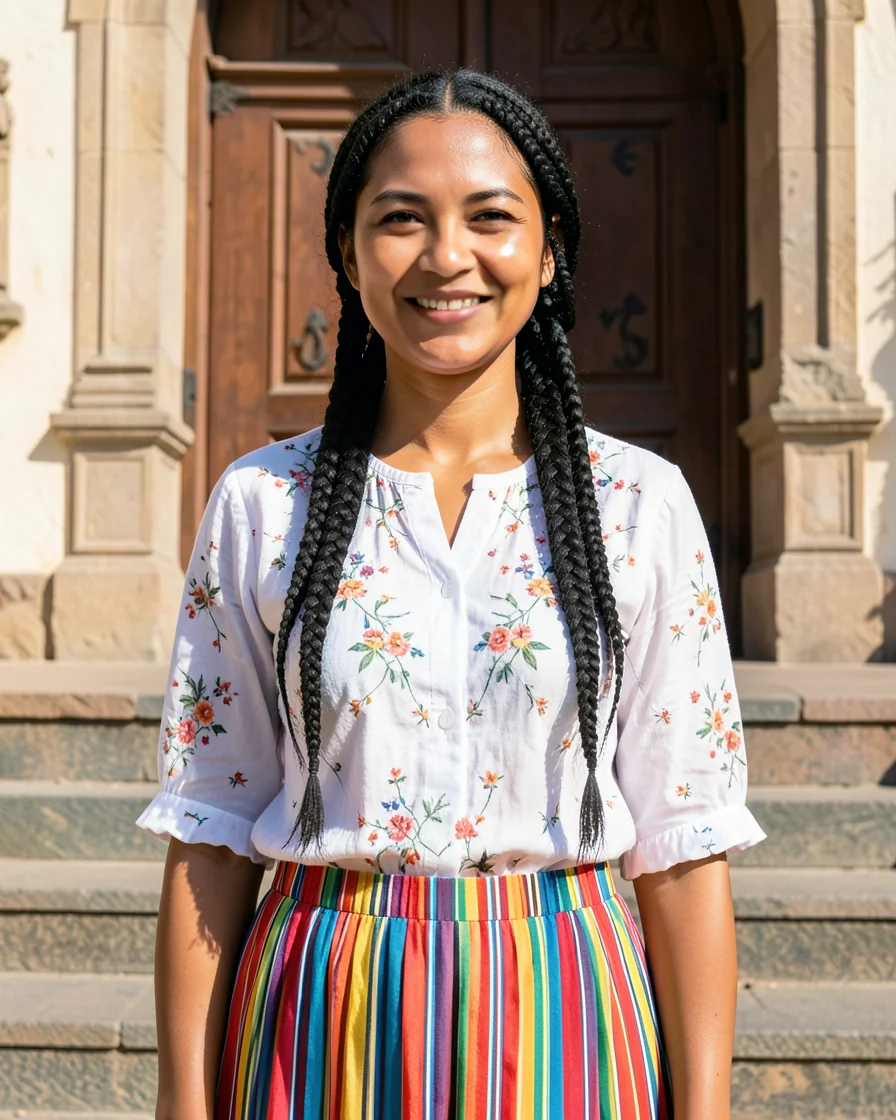
At thirty-two, I still prefer plain cloth when a garment is first brought to my table. A white cotton blouse can hide every careless measurement, but it cannot hide one; the seams remain visible in the way it hangs. This one came from a neighbor who wanted a traditional blouse comfortable for market mornings and for dancing later.
Lines on Plain Cloth
She stood near the window while I recorded the shoulder width, arm length, and depth of the neckline. The blouse was to sit over a full skirt, so I allowed for another layer at the waist. We raised both arms, sat down, and bent forward. I marked the changes in chalk before cutting anything.
The first fitting measures the body; the second measures ordinary life.
On white cotton, I chose colors that would remain visible after washing: a narrow green band at the cuff, small red flowers along the placket, and blue stitches around one collar. The pattern was not copied from a picture. I drew the spacing around the buttons, where a hand stitch can look deliberate without making the front feel crowded.
Inside the Seam
Most of my work stays hidden. I turn the side seams inward twice and catch the last centimeter with small, even stitches, trimming the armhole allowance in short steps so the curve will not tighten when the sleeve moves. Before embroidering, I wash small cotton swatches, let them dry, and compare the thread in La Paz sunlight, which can expose a dye lot that looked balanced under the shop lamp.
The blouse returned for a second fitting with the embroidery partly complete. One collar sat slightly higher than the other because I had followed the first fitting's chalk line without checking it against the shoulder seam. I unpicked the top edge, steamed the cotton lightly, and marked the true line with a single blue thread.
She tried the blouse with the skirt she planned to wear. The green cuff disappeared against a dark green band, which she liked, while the red flowers stood clear above it. We decided to keep only one red flower near the wrist. A client often knows what belongs on her body before I can see it.
Clothes become traditional through repetition, not through display.
While sewing the final buttonhole, I kept the thread almost invisible from the outside. A button of pale shell was small enough for the placket but strong enough for repeated use. I fastened and unfastened it several times, then asked her to do the same. The test mattered more than my assurance.
Traditional clothing in Bolivia is not one fixed shape, and my work would be too narrow if I treated it that way. A woman may wear the same skirt to the market, to a family gathering, or to an evening dance. The blouse must allow those changes without asking her to become someone else each time.
The machine rests while I hand-finish the cuffs. Outside, vendors begin folding awnings against the evening wind, and the smell of dust from the road comes through the open door. I drink a cup of coca tea between the last knots. High altitude gives the day a slow edge, and I have learned not to rush it.
When the blouse was finished, she turned it over and examined the inside seams before looking at the embroidery. That order pleased me. A garment should first be sound enough to trust, then beautiful enough to notice. I trimmed one loose thread, returned the pocket pattern to the drawer, and hung the blouse by the window so the white cotton held its colored stitches clearly in the last daylight.
中文译文
三十二岁这年,衣服第一次送到我桌上时,我仍偏爱素净的白棉布。一件白上衣能藏住粗糙,却藏不住错误,尺寸稍有偏差,接缝就会从垂坠的样子里显露出来。这件衣服来自一位邻居,她想要一件传统上衣,赶集时穿着舒服,晚上跳舞时也能穿。
在素布上画线
她站在窗边,我记下肩宽、臂长和领口深度。上衣要套在宽裙外面,腰间还得给另一层布料留出位置。我们抬起双臂、坐下、弯腰,我用粉笔标出要改动的地方,然后才动剪刀。
第一次试身量的是身体,第二次量的是日常生活。
白棉布上,我选了洗过以后仍能看清的颜色:袖口一道细绿,门襟上几朵小红花,再在一侧领口缝上蓝线。图案没有照着现成画稿描摹。我按照纽扣的位置安排间距,让手缝线显得仔细,却不至于让前襟显得拥挤。
接缝的里面
我的大部分工作都藏在里面。侧缝折进去两次,再用细小均匀的针脚收住最后一厘米;袖窿的余量则一小段一小段地修,免得手臂活动时把弧线绷紧。绣之前,我会洗几块小棉布样,晾干后在拉巴斯的日光下比线,因为店里灯光下显得匀和的颜色,到了阳光下可能完全不同。
上衣第二次送来时,刺绣已经完成一部分。一侧领口比另一侧略高,因为我照着第一次试身留下的粉笔线走,却没有重新核对肩缝。我拆开上沿,轻轻蒸过棉布,再用一根蓝线标出真正该有的位置。
她穿上准备搭配的裙子试看。绿色袖口落在深绿色衣饰里,几乎融在一起,她很喜欢;红花却清楚地停在上面。我们因此决定只在手腕附近留一朵红花。顾客往往比我更早知道,什么颜色真正属于她的身体。
衣服因反复穿着而成为传统,不因陈列而成为传统。
缝最后一个扣眼时,我把线藏在正面几乎看不见的地方。浅色贝壳纽扣不大,正适合门襟,又能经得住反复扣合。我自己扣上又解开几次,再请她也这样做。比起我的保证,真正扣紧才是更有用的检验。
玻利维亚的传统服饰并非只有一种固定形制,若我把事情做得太窄,便会错过穿衣者真实的生活。同一条裙子可以穿去市集、家人聚会,也可以穿去晚间舞会。上衣必须容得下这些变化,而不必要求她在每个场合都变成另一个人。
给袖口收最后几针时,缝纫机停着。外面,摊贩开始收拢棚布,街上的尘土味从敞开的门里进来。我在打最后一个结之间喝一杯古柯茶。高海拔让这一天显得迟缓,我已经学会不去催它。
衣服完成后,她先翻过来查看里面的接缝,然后才去看刺绣。这个顺序让我高兴。衣服首先要结实得足以信任,之后才美得值得注意。我剪掉一根松线,把口袋纸样收回抽屉,再把上衣挂在窗边,让白棉布在最后一段日光里清楚托住那些彩色针脚。