Essay
Cutting a Worn Hose in the Afternoon
下午拆换一根旧气管
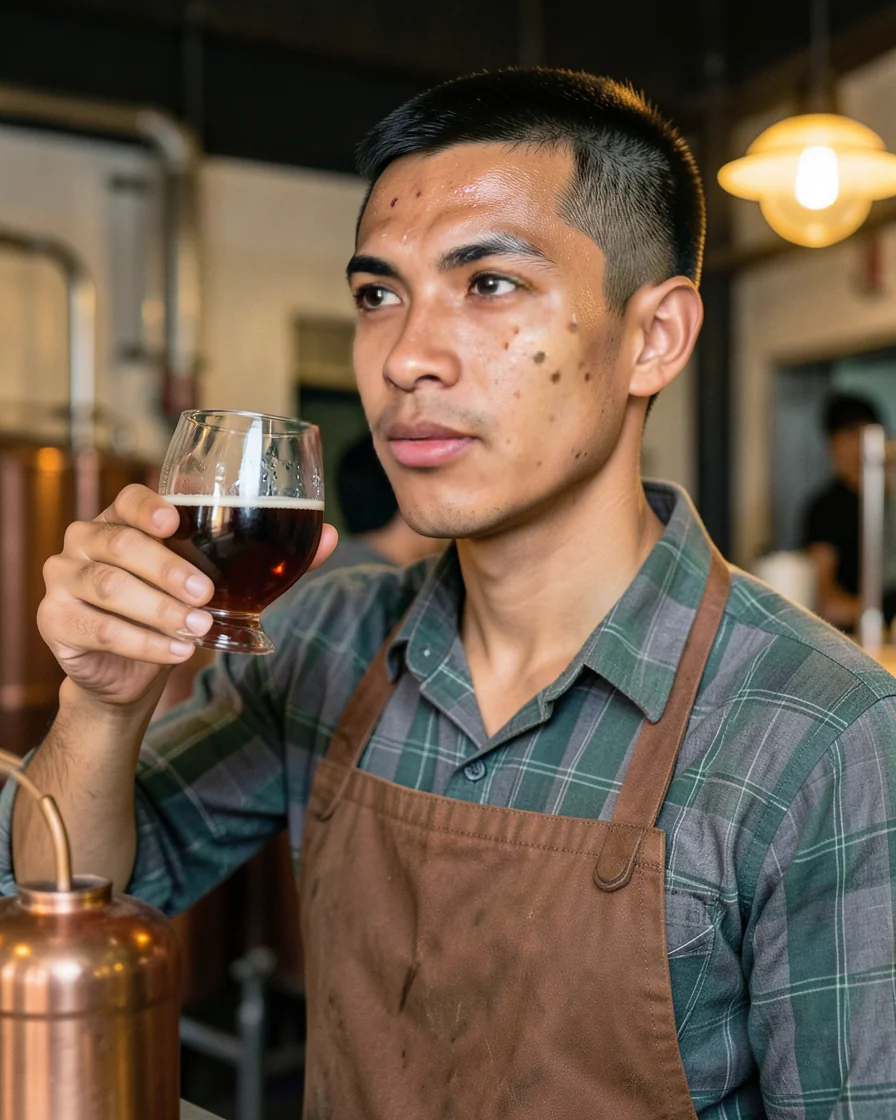
The dive shop is a low building with a fan in the ceiling and a rack of fins along one wall. I sit behind the counter in the dark brown leather apron when I am rebuilding a set of gear. It keeps the rust off my shirt, the salt out of the seams, and the blood off my hands when a fin buckle cuts me.
This afternoon is a BCD that came back with a slow leak. The culprit is the low-pressure hose, cracked on the outside near the inflator, and I cut it with a knife that is too big for the job. It takes ten minutes because I do not trust my hands to hurry with a blade.
The Order of the Work
First everything comes apart on the mat, laid out left to right in the order it will go back together. I photograph nothing and write nothing down. Nine years of this have taught me that the order lives in the hands, not on paper.
Then the new hose, cut at an angle, the end dipped in talc so it will not stick, and a band of rubber cement around it. The smell is sweet and chemical and it stays in the shop for the rest of the day. I ventilate with the door open, which means the whole street can hear me working.
The second job is a wetsuit sleeve with a small tear that I stitch with a needle meant for fishing nets. It is not a good needle but it is the needle I have. A good seam takes ten minutes. A bad seam comes apart in the sea, and the sea is not polite about it.
A repair that holds is a promise nobody will ever hear me keep.
The apron is dark brown because that was the only leather I could buy that year, and I have repainted the strap twice. It is heavier than it looks. On the boat I wear nothing but a shirt and a rash guard, but in the shop the apron is the thing that keeps the salt off my skin.
A woman comes in with a mask that has been leaking. She says it started yesterday and it always happens to her. I put it in the soak tank, find the crack in the silicone, and tell her it is the seal, not the glass. She wants to know the price before she wants to know the reason. I give her the price.
I refill the tank, wash the regulator, hang the hoses to dry in a line along the wall. Everything in the shop is where it belongs, which is the only standard I keep. Outside, the light comes through the door and lies on the floor in a long yellow rectangle that moves as the day moves.
Evening
At five I close the counter and walk the two blocks to the water. From the end of the pier I can see where the wall begins, a darker line in the shallows. I do not get in. Some days the sea is work, and some days I am only tired, and there is no version of me that gets both.
On the way back I buy a bun and a bag of ice for the cooler at the shop. The fish vendor waves. My shoulders are burned again, because I always forget that the sun arrives before the boat does. I will put the apron on tomorrow and it will be there, waiting, the strap soft as an old friend.
中文译文
潜水店是间低矮的平房,头顶一台吊扇,一排墙挂着蛙鞋。要重装一套装备时,我就穿着那条深棕色皮质围裙坐在柜台后面。它替我挡住铁锈、盐和血——比如蛙鞋扣环划到手的时候。
今天下午是一套BCD回来时慢慢漏气。祸首是充气阀旁那段开裂的低压气管,我用一把太大的刀把它剪断。花了十分钟,因为我不信自己的手在拿刀时可以快。
活儿的顺序
先是一样样拆开,摊在垫子上,按回去的顺序从左到右排好。我不拍照,也不写下来。做了九年,我知道顺序长在手上,不在纸上。
然后是气管,斜着剪,端口蘸滑石粉,免得粘进软管,接头再缠一圈橡胶胶水。味道甜而刺鼻,整间店一天都留着。我开着门通风,于是整条街都听得见我干活。
第二件活儿是潜水衣袖子上的一道小口子,我用一根本来是缝渔网的针把它缝上。这不是好针,但这是我有的针。一条好缝线要十分钟;缝不好的线会在海里散开,而海对它不客气。
撑得住的修理,是一个没人会听见我兑现的承诺。
围裙之所以是深棕色,因为那年我只买得起那种皮子,背带补过两遍漆。它看着没这么沉。在船上我只穿短袖和防晒衣,在店里,围裙是替我把盐挡在皮肤外的东西。
有位女士拿进一副漏水的面镜。她说昨天开始漏,而且她总是这样。我把面镜放进浸泡槽,找到硅胶上的裂口,告诉她问题在密封不在玻璃。她先问价钱,才想知道原因。我给了价钱。
我给气瓶充气,洗调节器,把气管挂在墙边的一根绳子上晾。店里每样东西都在该在的位置,这是我唯一守的标准。外面,光从门口照进来,在地上铺成一块随白天移动的长黄方块。
傍晚
五点我关掉柜台,走两段路到海边。从栈桥尽头能看见礁盘开始的地方,浅水里一道更深的暗线。我没有下水。有些日子海是工作,有些日子我只剩下累,而没有哪个版本的我两样都有。
回去路上我买了一个面包和一大袋冰,塞进店里的冷藏箱。鱼贩朝我挥手。我的肩膀又晒伤了,因为我总是忘记太阳比船先到。明天我再穿上围裙,它会在那儿等着,背带软得像老朋友。