Essay
The Hour After the Morning Shift
清晨出炉后的一个小时
I leave the bakery at ten past seven with flour on my forearms and the city beginning properly around me. Tirana's traffic has thickened; coffee cups are lifted, shop awnings are pulled out, and people speak in the clipped voices of a weekday. I buy nothing and walk north, carrying the smell of warm crust in my clothes.
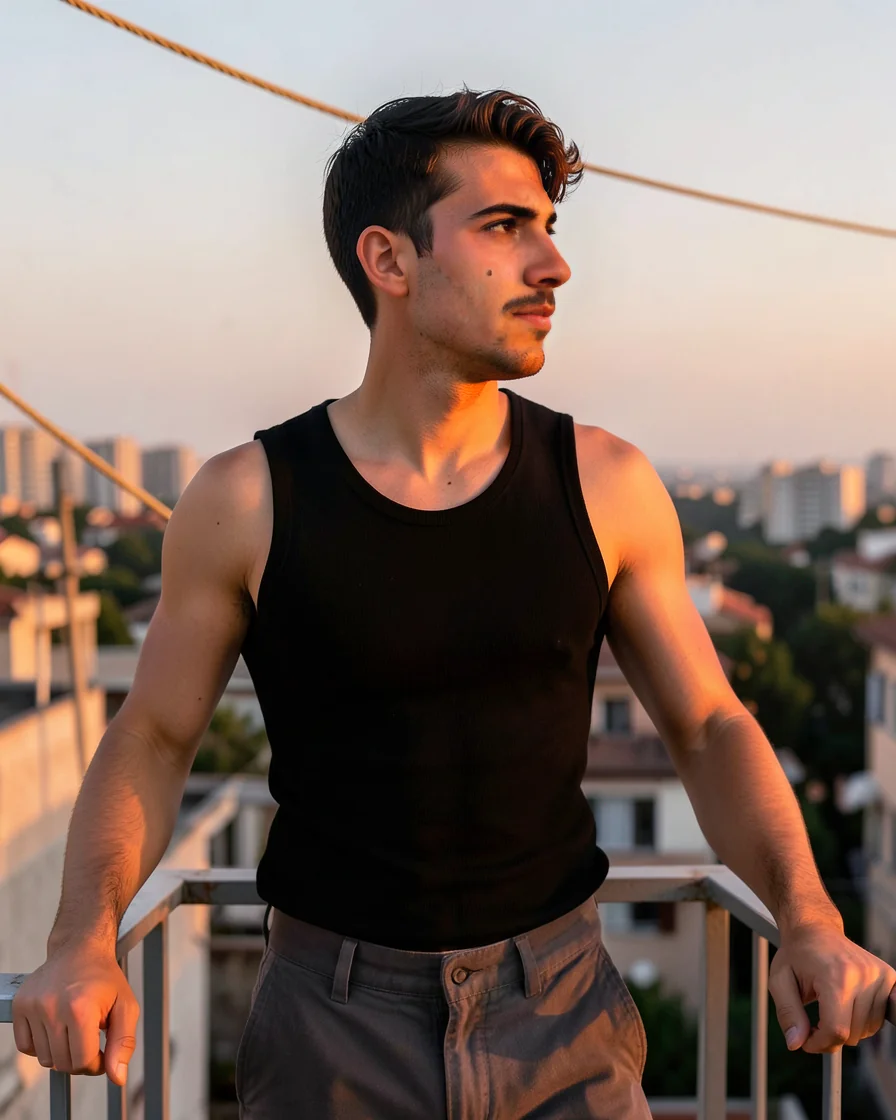
The roof of my building is small and plain, enclosed by a low parapet. I sit near the edge with my back to the stairwell door. From there, rooftops extend in uneven rows toward the hills. Laundry lifts on a line, a satellite dish turns, and the pale shapes of the newer buildings brighten under the morning sun.
After the ovens go cold
For the first hour after a shift, my body still expects the oven. I feel for heat when I pass a sunlit wall and imagine the soft knock of a tray set down on steel. My lower back tightens when I sit. Then the muscles loosen, one by one, and the rooftop's ordinary noises take their place: pigeons, a radio, a broom against tile.
I wear the light blue denim jacket over the pale gray-blue linen shirt. The jacket is too warm once the sun reaches the roof, so I open it and roll the sleeves of the linen beneath it. Flour has dried into a thin chalk along one cuff. I brush it away, then decide not to. It is evidence that the night happened.
The body keeps the shift longer than the mind does.
Quiet is not the same as emptiness. It is what remains when every task has found its place. The mixer, the oven timer, the scrape of a bench: each sound used to divide the night into useful sections. Here, with no task waiting, I can hear the gaps between them. Some mornings those gaps feel wide; some mornings they make the hour rest.
A route toward evening
I stay until the heat makes the parapet uncomfortable. Then I go down, eat something simple, and pull the curtains. The room darkens around noon. I sleep until dusk, when the Lana River and the cats become more immediate than any clock. My day has two openings: one for bread, one for the river.
Night work makes daylight a place to pass through, not a place to spend.
Before work, I return to the same roof with the light behind the hills. Tirana is quieter then, though never silent. Windows close one by one, signs are switched off, and the river holds the last light without glare. I check the time, walk down, and let the north neighborhood close around me.
At one forty in the morning, I unlock the bakery. The room is cold. I weigh flour, check the starter, and begin the first dough. Across the city, people are asleep, and the oven clock advances in the dark. I have no wish to explain the hour to them. For now, bread is enough, and the work is quiet.
中文译文
七点十分,我带着前臂上的面粉离开面包房,地拉那也在这时真正醒来。街上车流变密,咖啡杯被端起,店铺的遮阳棚被拉出来,人们用工作日特有的短促语气交谈。我什么也没买,只朝北走,身上还留着热面包壳的香气。
我住的那栋楼有一个不大的天台,四周只有一道低矮的围墙。我背对楼梯间的门坐在边上。从这里看出去,屋顶一排排向山脚延伸,晾衣绳被风带起,卫星天线缓缓转动,新一些的建筑在晨光里显出浅淡的颜色。
烤炉冷却以后
下夜班后的第一个小时,身体仍会期待烤炉。我经过被阳光晒暖的墙,会下意识去找热意,也会想象烤盘放上钢架时那声轻响。坐下时腰背先绷紧,随后肌肉一块块放松,天台寻常的声音才填补进来:鸽子、收音机,还有扫帚擦过瓷砖。
我穿着淡蓝色牛仔外套,里面是浅灰蓝色亚麻衬衣。太阳照上天台后,牛仔外套渐渐太热,我便解开衣襟,把里面的亚麻袖口卷起来。其中一边袖口已经干了一层薄薄的面粉。我先把它拂掉,随后又决定留下。这是夜晚确实发生过的证据。
身体记住一个班次,总比意识更久。
安静并不等于空无。它是每件任务各归其位以后剩下的东西。搅拌机、烤炉计时器、刮过案板的声音:过去每个声响都把夜晚分成有用的段落。来到这里,没有任务等着我,我便能听见它们之间的空隙。有些早晨,那些空隙显得很宽;也有些早晨,它们让这一小时得到休息。
通往黄昏的路
我待到阳光让围墙变得硌人,才下楼,吃点简单的东西,再把窗帘拉上。房间在正午前后暗下来。我一直睡到黄昏,那时拉纳河和猫咪比任何钟表都更直接。我的白昼只有两个入口:一个通向面包,一个通向河流。
夜班让白昼成为经过的地方,而不是停留的地方。
上班之前,我会回到同一座天台,山后的光还没有完全退去。那时的地拉那更安静,却从不沉默。窗户一扇接一扇合上,招牌熄灭,河流平缓地托住最后一点余光。我看过时间,走下楼,让城北的街区在四周重新合拢。
凌晨一点四十分,我打开面包房的门。屋里很冷。我称好面粉,检查面种,开始揉第一团面。城市另一边的人还在睡,烤炉时钟在黑暗中向前走。我并不想向他们解释这个时辰。现在有面包就够了,工作也很安静。