Essay
Repairing the Brown Leather Apron
修补深棕色皮围裙
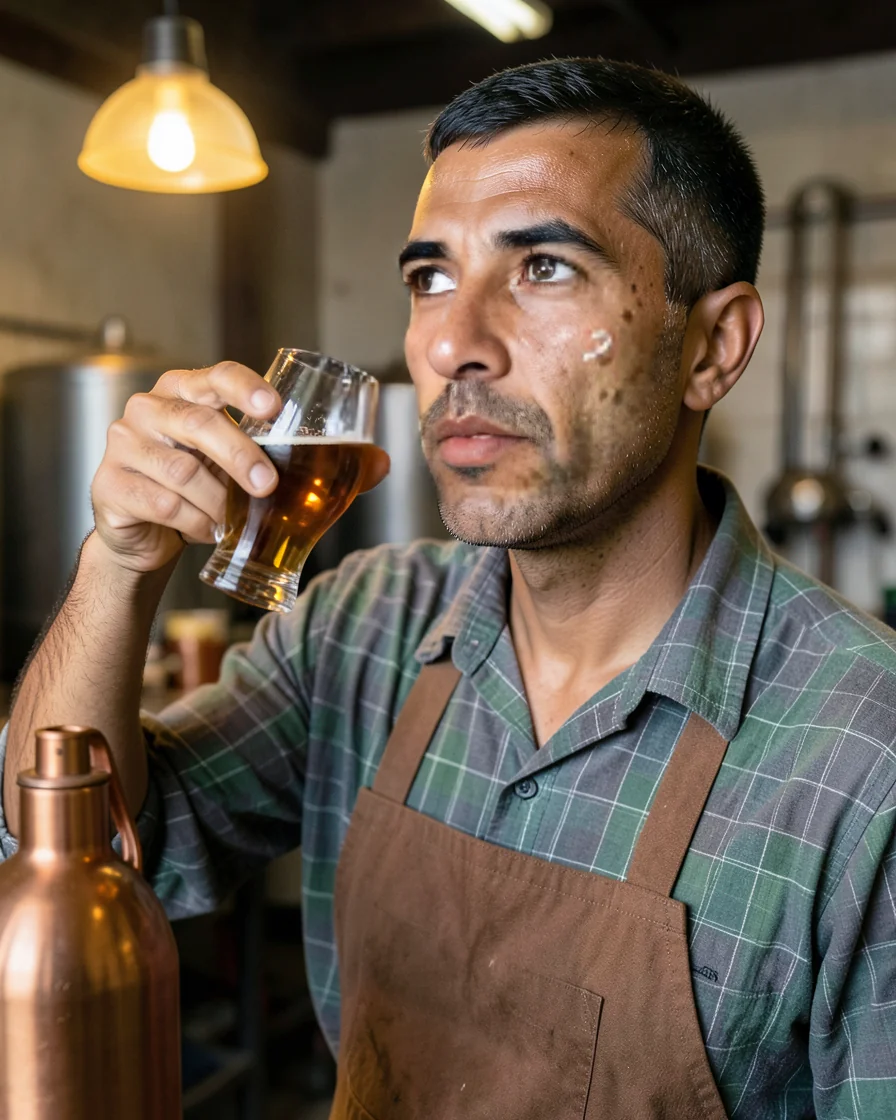
The west wind had pulled hard through the night, and the brown leather apron I wear on deck was caught by a hook near the net crate. The tear ran diagonally across the front, opening the seam by nearly a hand's width. Salt had stiffened the edges. I brought the apron below, spread it over my knee, and cut away only what the hook had ruined.
Using a sailmaker's needle and waxed sail thread, I close the two sides one small stitch at a time. The leather resists, then gives with a soft pull that reminds me of bending a taut line. I work along the grain, not across it, and leave the new thread a little darker than the old surface. This is not decoration. The apron must hold close to my body when a wet net comes aboard or a hook swings bac
A Stitch Before the Weather
The leather was thick when I bought it and has been softened by sun, salt, and use. There are pale scratches under my right hand and a dark patch where a crate corner once landed. A new apron would be stiffer, and stiffness can be dangerous when balance changes under load. I turn the piece over, press the damaged seam flat, and test it with my thumb. Repair is cheaper than replacement, but respect
While I sew, the crew prepares the boat. One man coils the spare line in long even loops. Another checks the hatch clips and moves the empty crates low in the hold. The third wipes salt from the wheel and tests the lock with both hands. I keep an eye on them between stitches, correcting nothing that does not need correcting. A good deck can be quiet before bad weather. Every loose thing has a habi
One sound repair is worth three shouted warnings.
The first rain arrives as a gray veil over the quay. I finish the last knot, pull the apron over my shoulders, and go to the wheel. The engine note drops slightly as the swell lifts us, then steadies. Wind pushes spray across the bow. I call the adjustment once, pointing to the line that needs two turns, and the deckhand takes it at once. There is no second shout. There never needs to be.
When the Wind Turns
For an hour the wind swings north and the sea becomes confused, short waves crossing the long ones. I reduce speed and let the hull find its angle. The old boat responds with a familiar shudder through the wheel. I watch the bow rather than the horizon, because the horizon lies when the sky closes. My father used to say that weather has two faces; the second one arrives after you have already met
When the clouds break, the apron is soaked and the repaired seam is still tight. We check every line for chafing, find one section abraded near the winch, and replace it before it parts. The crew drinks bitter coffee in the lee of the wheelhouse. I inspect the apron once more, seeing the hook mark, the darkened thread, and the small places where the leather still bears the sea. It has done its wor
A torn apron tells me where the crew was careless; a loose seam tells me where I was.
中文译文
西风在夜里一直用力刮着,我在甲板上穿的深棕色皮围裙被网箱旁的一只铁钩勾住。裂口斜穿前身,长度接近一掌。盐已经把边缘弄得发硬。我把围裙拿到下层,铺在膝上,只剪掉被铁钩扯坏的部分。
我用帆针和上过蜡的帆线,一小针一小针地把两边合拢。皮革先抗拒,随后随着柔和的拉扯让开,像一根绷紧的缆绳在弯曲。我顺着皮纹缝,不横着穿,新线比旧表面略深。这可不是为了装饰。湿渔网上船或铁钩向船员荡回来时,围裙必须贴紧身体。
赶在天气之前
这块皮买来时很厚,经过日晒、盐蚀和多年使用,才变得柔软。右手下面有几道浅痕,一块暗印是旧日被木箱角磕出来的。新围裙会更硬,而身体在受力失衡时,硬东西可能伤人。我翻过皮面,用拇指压平受损的接缝,再试它的牢度。修补当然比更换省钱,可敬重旧物比价钱更要紧。
我缝线时,船员也在准备船。一个人把备用缆绳盘成长而均匀的圈,另一个检查舱盖扣,把空箱移到船舱低处。第三个人擦去舵轮上的盐,用双手试了试锁紧装置。我每隔几针便看一眼他们,不纠正没有必要纠正的地方。坏天气来临前,甲板可以保持安静,而每样松动的物件都偏爱在最坏的时刻彻底松开。
一处牢靠的修补,胜过三句大声的警告。
第一阵雨像灰幕一样罩住码头。我打完最后一个结,把围裙套上肩头,走到舵轮前。涌浪把船抬起时,主机的声响略微低下去,随后重新稳住。风把浪沫推过船头。我只喊了一次,指向需要再绕两圈的缆绳,甲板手立刻照做。没有第二声吆喝,也从来不需要。
风向转变时
有一个小时,风转向北面,海面变得混乱,短浪横穿长浪。我放慢航速,让船体自己找到合适的角度。旧船通过舵轮传回熟悉的颤动。我盯着船头,不看地平线,因为天空合拢时,地平线会撒谎。父亲曾说,天气有两张脸,第二张总在你见过第一张之后才出现。我到十六岁才明白,他那时并非粗心。
云层散开时,围裙已经湿透,补过的接缝仍然紧实。我们检查每一段缆绳的磨损,在绞车旁找到一处快要磨断的地方,赶在它裂开前换掉。船员们在驾驶室外背风处喝苦咖啡。我又检查一次围裙,看见钩痕、发暗的新线,还有皮革上被海留下的细小印记。它又完成了一次自己的活。
围裙上的裂口会告诉我船员哪里粗心,松开的缝线也会告诉我自己哪里粗心。