Essay
A Train North, One Roll of Film
北上火车与一卷胶片
I left Barcelona before breakfast, carrying one camera, a small bag, and a roll of film I had loaded the night before. The train waited under a pale sky, its windows reflecting the apartment blocks I had just left. For once, I had no list of streets to cover. My only rule was to stay until the light changed, even if that meant missing the last easy journey home.
The ride north moved through flat fields and low industrial edges before the track began climbing. I kept the camera in my lap and the bag between my feet. Every few kilometers, the glass showed my own face layered over warehouses, water tanks, and sudden lines of trees. I made no photographs from the train. I wanted to arrive with my eyes, not my hands, already awake.
One Camera, No Corrections
At the station, I mounted the 35 millimeter lens and left the rest of my gear in a locker. The remaining bag felt too heavy for a short walk, so I kept only a paper bag with water, bread, and a thin jacket. The first roll of the trip was also the first roll I would not correct with a second exposure. If the frame failed, I wanted the failure to remain visible.
I had come for the famous view, but the forest kept offering smaller negotiations.
The trees thinned near the ridge, then closed again. Light came through in fragments rather than a single golden wash. I photographed a fern at the edge of the path, the pale bark of two birches, and a cyclist waiting for the gate to open. When a shaft reached the ground, it lasted less than a minute. I counted three frames before the air thickened and the contrast disappeared.
What the Roll Refused
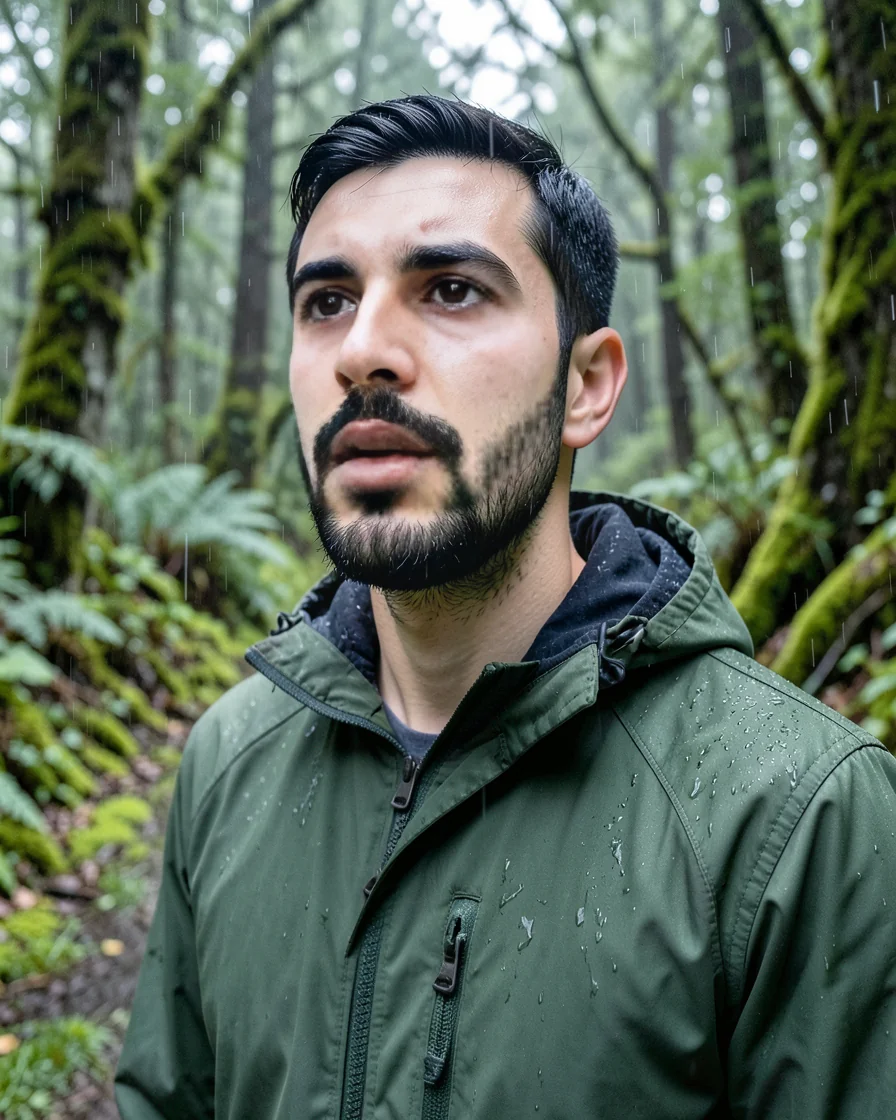
By late afternoon, the shadows had already crossed the path. I stopped waiting for the famous ridge and followed a lower trail where the trees were darker. There, the camera recorded a person in a red raincoat, though I never saw them clearly. In the final frames, rain began ticking against the leaves. I exposed for the wet highlights and let the rest fall into blue-gray.
I returned with four usable photographs and two obvious mistakes. The mountains I had expected to dominate the trip were hidden by cloud. Instead, the accidental pictures held damp soil, a moss-covered fence, and the cyclist's blue jacket disappearing around a bend. They did not look like postcards. That was why I kept looking at them on the train back toward Barcelona.
Travel became less about collecting places than noticing how one patch of light changed the next.
Back in Barcelona, Spain, I developed the negatives in the small bathroom I use as a darkroom. The red raincoat was deeper than I remembered, almost brown. The fern existed only as a pale shape, its veins barely visible. I numbered the strips and marked the four keepers with a soft pencil. The journey had not given me the landscape I planned; it had left me with a more exact record of the day.
The next morning, I put the prints on the kitchen table and let my neighbor see them while she waited for the coffee to brew. She chose the empty fence, not the misty ridge. Her choice made sense. A photograph can belong to the place it came from, but the person looking at it decides what it becomes. I packed the negatives again and left the prints on the table.
Two weeks later, the train journey returned to me each time I looked at the finished pictures. The city did not appear literally, but the apartment blocks reflected in the window had taught my eye to look through one layer toward another. Barcelona stayed at the margins of every frame, quiet enough to let me see how far I had actually traveled.
中文译文
天还没亮,我就离开巴塞罗那,只带了一台相机、一个小包,以及前一晚装好的那卷胶片。火车停在发白的天空下,车窗映出我刚离开的公寓楼。那天我没有列出一张街道清单,唯一的规则是等到光线改变,哪怕因此错过最省事的返程。
北上途中,列车先穿过平坦的田野和低矮的工业边缘,随后开始爬升。我把相机放在腿上,包搁在双脚之间。每隔几公里,车窗上便叠映出我的脸,以及仓库、水箱和突然出现的成片树木。我没有在火车上拍照。我希望抵达时先醒过来的是眼睛,而不是手。
一台相机,不做补救
在车站,我装上三十五毫米镜头,把其余器材留在寄存柜里。剩下的包对一段短途步行来说仍然太重,于是我只留下一个纸袋,里面装着水、面包和一件薄外套。这趟旅程的第一卷胶片,也是我第一次不准备用二次曝光去补救的胶片。如果画面失败,我希望失败本身能够留下。
我本来是为了那道众所周知的远景,树林却只肯谈一些更细小的条件。
接近山脊时,树木先变得稀疏,随即又合拢。光从枝叶间零碎地落下来,而不是铺成一片完整的金色。我拍下小径边的蕨类、两棵白桦苍白的树皮,以及一名等着铁门打开的骑车人。一束光落到地面时,持续不到一分钟。我只来得及按三次快门,空气便变厚,层次也随之消失。
这卷胶片拒绝呈现的东西
到了下午,阴影早已越过小路。我不再等那道著名的山脊,而是沿一条更暗的低处步道向前。相机在那里拍到一个穿红色雨衣的人although我从未看清。最后几张照片里,雨开始敲打树叶。我按照湿处的高光曝光,任其余部分沉入蓝灰色。
旅行不再是收集地点,而是留意一束光如何改变下一束。
回去时,我只有四张可用的照片和两张明显的失误。原本以为会占据画面的山峦,全被云藏了起来。反而是那些偶然拍下的画面留下了潮湿的泥土、长满苔藓的栅栏,以及骑车人绕过弯道时消失的蓝外套。它们不像明信片,也正因为如此,我在返回巴塞罗那的火车上仍反复看着它们。
旅行不再是收集地点,而是留意一束光如何改变下一束。
回到西班牙的巴塞罗那后,我在充当暗房的小浴室里冲洗底片。红色雨衣比记忆中更深,几乎接近棕色。那株蕨类只剩下一片模糊的浅色,叶脉几乎无法辨认。我给底片编号,又用软铅笔标出四张值得留下的照片。这趟旅行没有交给我预想的风景,却留下了一份更准确的当天记录。
第二天早晨,我把照片放在厨房桌上。邻居来等咖啡时,也顺便看了看。她选了那段空荡的栅栏,而不是云雾中的山脊。她的选择有道理。照片可以属于它被拍下的地方,但观看它的人会决定它最终成为什么。我重新装好底片,把照片留在桌上。
两周以后,每次看完成品,我都会想起那段火车旅程。城市没有直接出现在照片里,但车窗映出的公寓楼教会了我的眼睛穿过一层表面,看见更远的另一层。巴塞罗那始终停在画面的边缘,安静得足以让我看清自己究竟走了多远。